Click the quotation text to discover what it refers to!
Click the quotation text to discover what it refers to!
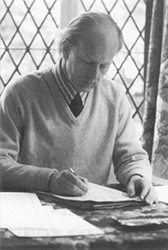
I would like to see his music played as much as possible.
Edmund Rubbra
John Barton Armstrong was a child prodigy at playing by ear and improvising, and was hailed by his school headmaster, at age 12, as someone who could keep the entire school entertained by his improvising on the piano. At age 17, to great acclaim from his schoolteachers, he single-handedly composed an operetta, wrote all the verses and dialogues, produced it, and acted and sang in it.
After such a promising early start, the War intervened and Armstrong joined the Navy; the Admiralty sent him to Cambridge to study electronic engineering, which, besides music, was another passionate interest. At Cambridge he met Herbert Howells, who expressed amazement at how far Armstrong had progressed, musically, on a self-taught basis.
After the war, Armstrong read Law and was called to the Bar, but in 1951 went to work for Vickers-Armstrongs Ltd on aeronautical design (eventually ending up in the project design team of Concorde). However, he left Vickers-Armstrongs in 1964 to pursue a music degree at Durham University, from which point he stuck primarily to a musical career. Armstrong also took a great interest in politics, however, being chairman of the Yateley Young Conservatives in 1947 and putting up as a candidate for the House of Commons (but coming second) in the mid-1970s.
Armstrong was a remarkable polymath who wrote huge amounts of music throughout a life that encompassed several varied careers in a variety of fields, though he left many compositions unfinished. He wrote a great deal of piano music in particular, finding the task excessively straightforward: “It’s too easy: you sit down and improvise something, and you just write it down.”
John Barton Armstrong was a composer of international reputation, with a wide range of achievement. Among his commissions have been:
‘Forest Impressions’ – for the Ashford Orchestra; a record, now CD, of this orchestral suite is on the market. (See below.) It is a suite of warm, sometimes pastoral, nostalgic and beguiling music, showing the composer’s love of colourful modulation, and has been described as ‘very English’. The movements are:- Pine Silhouettes – Wistful Elm – Solid Oak – Swaying Poplar – Drooping Willow.
‘Concertino’ – for chamber group, for a Birmingham concert of modern English music – offers a kaleidoscopic display of independently moving solo instruments, ranging from Trombone to Harpsichord, in a texture evolved from simple figures, with mobile note-clusters, all interweaving and reflecting.
‘Distant World’ – wind trio, for a contemporary music recital. Recent performances include in Purcell Room and Surrey Heath Arts Festival.
‘Cape Horn’ – electronic music, for a Society for the Promotion of New Music concert; later chosen for music festivals at Notting Hill and Little Baddow. An imaginative ‘electric’ representation of a tempestuous passage through the seas off Tierro del Fuego.
‘Incident at Waterloo’ – suite for string orchestra, for Wellington College, and vividly depicting and reflecting on the Battle of Waterloo.
‘Cello Sonata’ – for the recitalist, the late Pamela George. Performed by Markus Stocker and Michael Dussek at St. John’s Smith Square, and on BBC Radio 3. Recent performances include in Purcell Room.
‘The Musicians’ Carol’ – a simple but engaging piece, for an ISM function.
‘Airborne’ – a piano suite, for a Kensington contemporary music concert. It is a set of characteristic pieces, each quite briefly, but with great clarity, and unusually, suggesting some aeronautical experience. Written during the composer’s tours of Latin America, and dealing with various finger techniques, titles range from Glider, Cirrus and Ballooning to Caribbean Cumulus, Parachute and Over the Pole.
‘The Times Have Changed; Surrey in Legend and Music’ – a concert of the composer’s poetry, dialogue and music, for one of the Surrey Heath Arts Festivals.
His third string quartet was first performed at a Festival of English Music at South Hill Park Arts Centre, Bracknell; it was then broadcast, and a record of it is on the market. (See below.) The quartet broke new ground in the handling of this exacting medium, tapping a rich seam of musical devices – and not without a display of sheer harmonic revelling. It is odd, perhaps, but are we right in thinking the scherzo has acquired an illusion that it should really have been born a Samba?
This quartet signalled the way to fully symphonic writing.
In an article in ‘Composer’ magazine he wrote as follows:
If you are a composer today, you can throw off your systems and theories, your Papier- or Gebrauchsmusik, atonalisms and other ‘isms’, your aleatoric or oriental or jazz or folk adulterations and children-directed exercises, your modal and mediaeval graftings; plus any other atrophying fetters or fetiches. All you need in order to express your own genius to its maximum is an ordinary, simple, common or garden pencil, and a piece of paper.
MUSIC IS BORN INNOCENT;
BUT IS EVERYWHERE SELF-CONSCIOUS . .
| Composer | Work | Grade | Duration | Published | Price | ||||
|---|---|---|---|---|---|---|---|---|---|
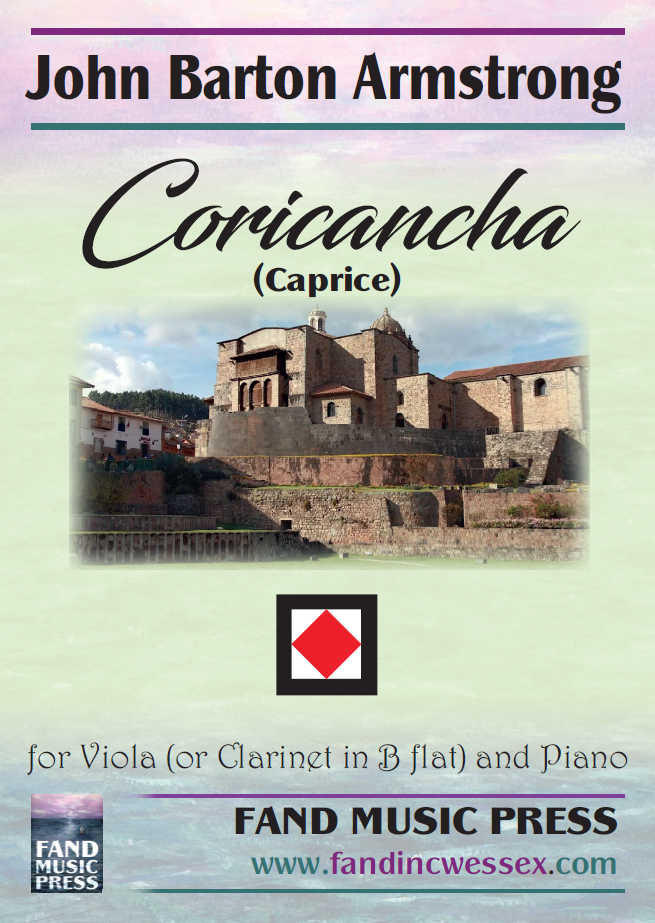 | John Barton Armstrong | Coricancha Caprice for viola (or clarinet in B flat) and piano | 6¼ mins | 14th September 2026 | £9.95 | ||||
| Forces: Viola, Piano | |||||||||
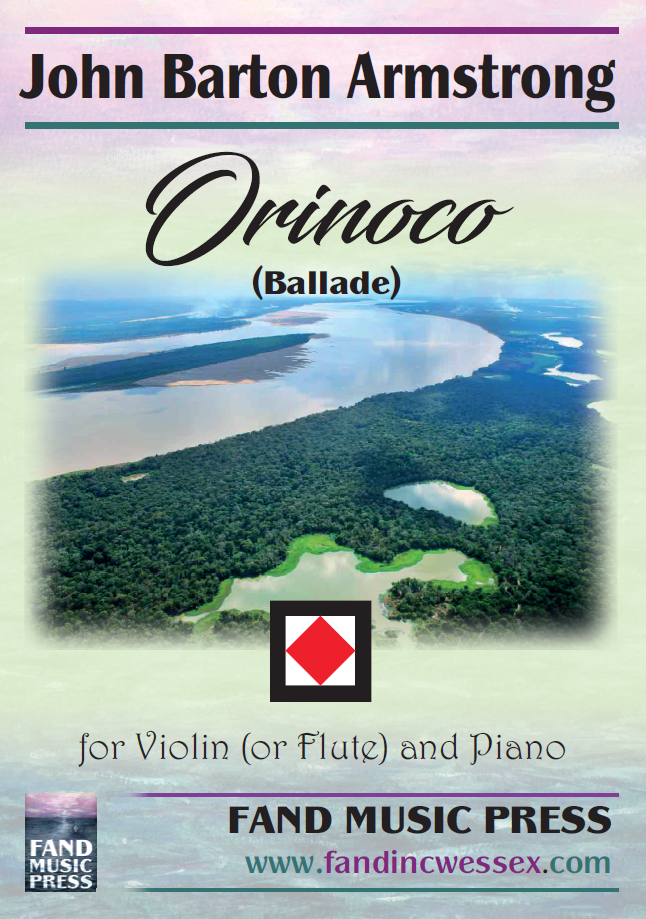 | John Barton Armstrong | Orinoco Ballade for violin (or flute) and piano | 7½ mins | 14th September 2026 | £9.95 | ||||
| Forces: Violin, Piano | |||||||||
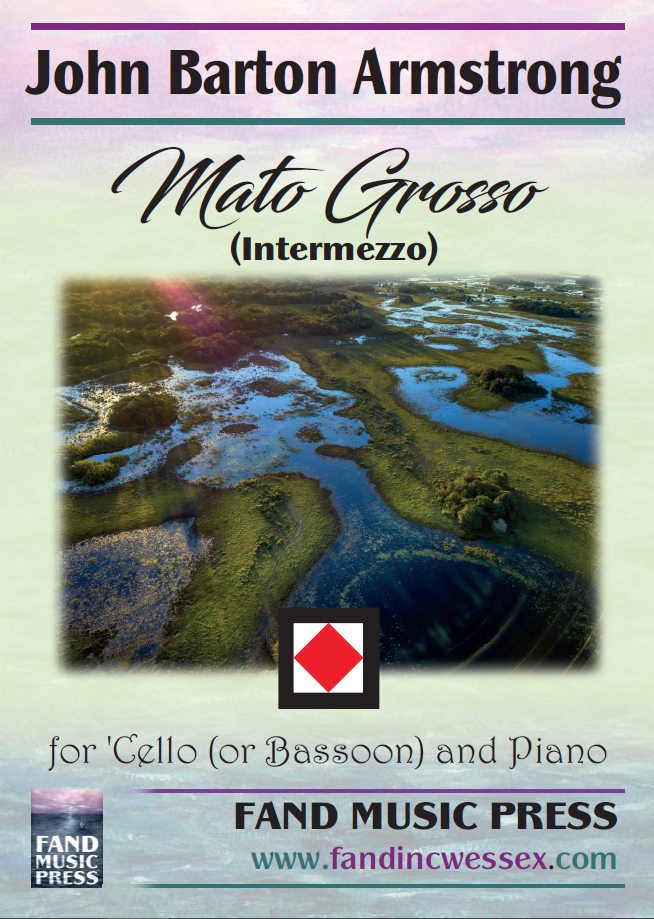 | John Barton Armstrong | Mato Grosso Intermezzo for 'cello (or bassoon) and piano | 5 mins | 14th September 2026 | £9.95 | ||||
| Forces: ’Cello, Piano | |||||||||
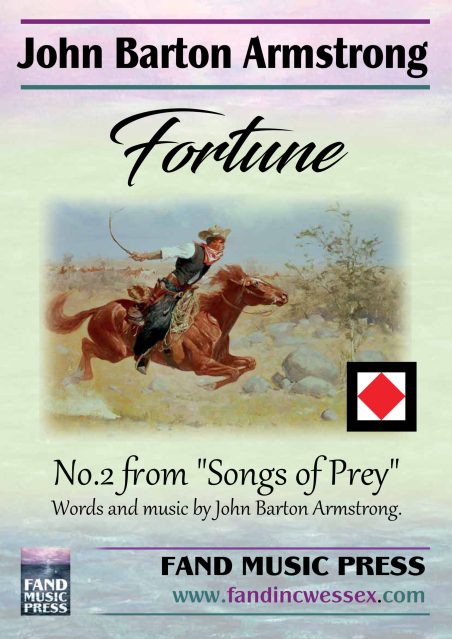 | John Barton Armstrong | Fortune for voice and piano | 7 | 1¾ mins | 1st September 2026 | £5.50 | |||
| Forces: Voice, Piano | |||||||||
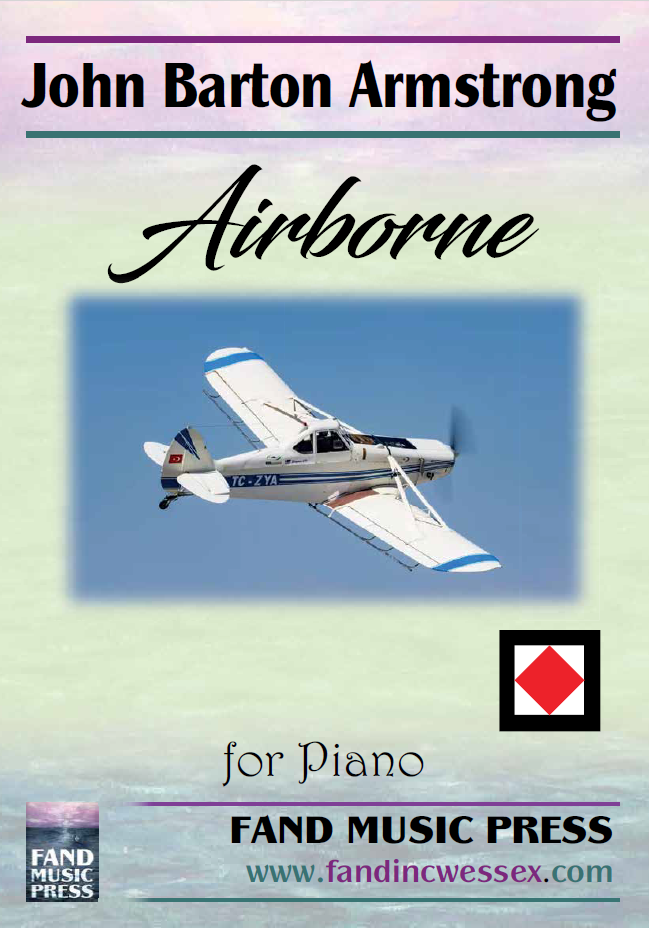 | John Barton Armstrong | Airborne for piano | 7 | 16 mins | 31st August 2026 | ||||
| Forces: Piano | |||||||||
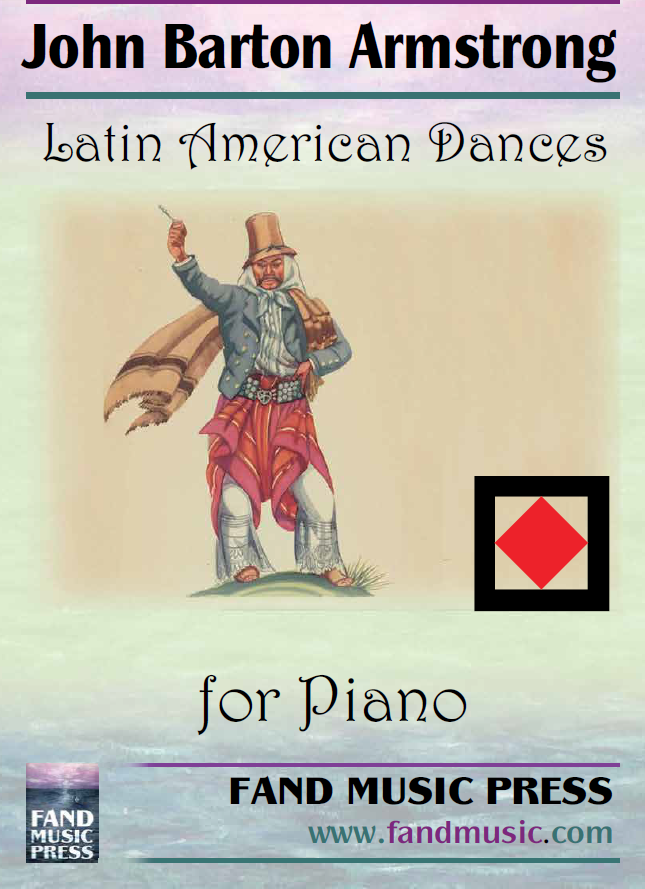 | John Barton Armstrong | Latin American Dances for piano | 8 | 19 mins | 15th August 2026 | £12.95 | |||
| Forces: Piano | |||||||||
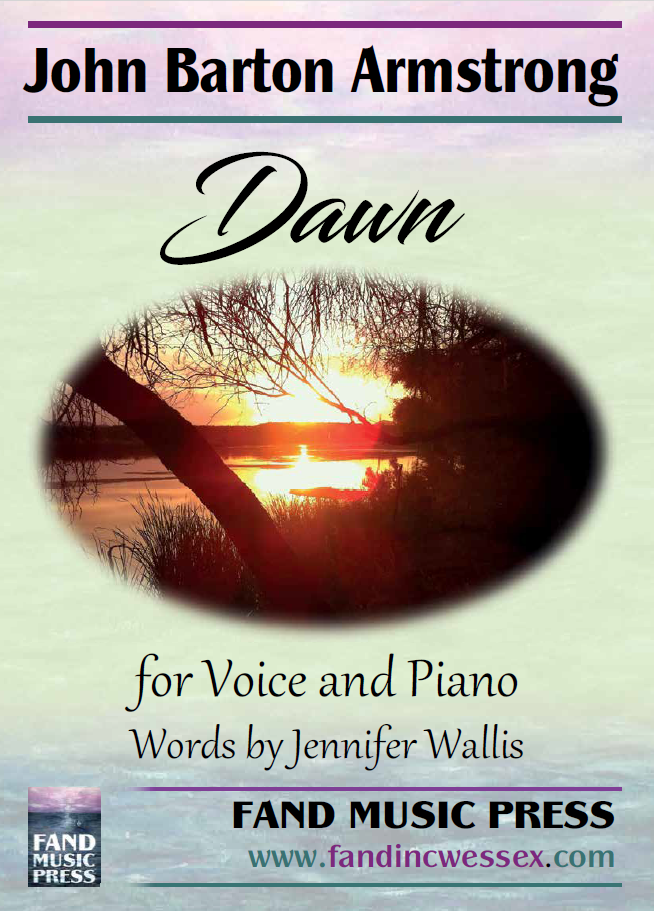 | John Barton Armstrong | Dawn for voice and piano | 7 | 4¾ mins | 14th August 2026 | £8.50 | |||
| Forces: Voice | |||||||||
 | John Barton Armstrong | 24 Preludes for piano | Advanced (post-Grade 8) | 48 mins | 1974 | £16.45 | |||
| Forces: Piano | |||||||||
 | John Barton Armstrong | A Celtic Chase Horn Rhapsody for horn and piano | 5 | 1962 | £9.00 | ||||
| Forces: French horn, Piano | |||||||||
 | John Barton Armstrong | Curios Six fantasy miniatures for piano | 13 mins | 1991 | £5.45 | ||||
| Forces: Piano | |||||||||
 | John Barton Armstrong | Everest Fantasia for piano | 1948 | £7.45 | |||||
| Forces: Piano | |||||||||
 | John Barton Armstrong | Katyn Five mazurkas for piano | 15 mins | 1974 | £7.45 | ||||
| Forces: Piano | |||||||||
 | John Barton Armstrong | Loss Nocturne for piano | 8 | 6½ mins | 1974 | £6.45 | |||
| Forces: Piano | |||||||||
 | John Barton Armstrong | Pinecroft Suite for piano | 6 | 7 mins | 10th January 2013 | £7.95 | |||
| Forces: Piano | |||||||||
 | John Barton Armstrong | Sonata for ’Cello and Piano | 8 | 30 mins | May 2012 | £14.95 | |||
| Forces: ’Cello, Piano | |||||||||
 | John Barton Armstrong | The Fand Grade 5 Piano Album A selection of pieces to Grade 5 standard | 5 | 2008 | £9.95 | ||||
| Forces: Piano | |||||||||
 | John Barton Armstrong | The Wessex Piano Album Nine Easy Pieces by The Wessex Composer Group (John Barton Armstrong, David Llewellyn Green, Mark Andrews, Peter Thompson) | 1996 | £7.45 | |||||
| Forces: Piano | |||||||||
 | John Barton Armstrong | Ubiquitous Poodle Eight piano pieces | 3 to 5 | 1941 | £7.45 | ||||
| Forces: Piano | |||||||||
 | John Barton Armstrong | Why? for piano | 8 | 1¾ mins | 1947 | £5.45 | |||
| Forces: Piano | |||||||||
| Author | Book | Published | Price | ||||
|---|---|---|---|---|---|---|---|
 | John Barton Armstrong | Composer Interviews no 2 John Barton Armstrong, interviewed by Peter Thompson ISBN 0-9535125-6-8 | 2007 | £7.00 | |||
 | Barry Armstrong | The Missing Music Mystery An unusual and provocative enquiry into the present state of British Music ISBN 0-9535125-5-X | April 2003 | £7.00 | |||
 | Barry Armstrong | The Riddle of Schoenberg An Open Letter ISBN 0-9535125-0-9 | 2007 | £7.00 | |||