| …fertile adventurous musical mind with a keen sense of humour. | ||
| —Malcolm Rudland, Peter Warlock Society Newsletter 91 |
Click the quotation text to discover what it refers to!
| …fertile adventurous musical mind with a keen sense of humour. | ||
| —Malcolm Rudland, Peter Warlock Society Newsletter 91 |
Click the quotation text to discover what it refers to!


Fand IncWessex Press is a publisher of high quality sheet music, CDs and books, all focussing on accessible 20th Century and contemporary composers and concentrating mainly on first editions. Please use the tabs at the top of the page to explore the catalogue. Further details, such as information about ordering, can be found on the Contact/Info page.
John Donne’s 1609 sonnet, Death, be not proud, left a lasting impression on Martin, who first came across it recited at the funeral of his father-in-law, Dr Gordon Ratcliffe, in 1987.
Death, be not proud, though some have called thee
Mighty and Dreadful, thou art not soe;
For those whom thou think’st thou dost overthrow,
Die not, poore Death, nor yet cans’t thou kill mee.
From rest and sleepe, which but thy pictures bee,
Much pleasure; then from thee do go.
Then from thee much more must flow,
And soonest our best men with thee doe goe.Rest of their bones, and soul’s deliverie,
Thou art slave to fate, chance, kings and desperate men.
And dost with poyson, warre and sicknesse dwell,
And poppie or charmes can make us sleep as well
And better than thy stroke; why swell’st thou then?
One short sleep past, we wake eternally
And death shall be no more; Death, thou shalt die.
It was set to music in 1992 for sixteen-part choir with soprano and alto solo voices, for David Hill and Winchester Cathedral Choir.
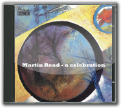
The work can be heard on the Martin Read – A Celebration CD.
The Mary Rose Songs are from a movement of the Millennium Composition, commissioned by Hampshire Music 2002, and are recommended for use with children in the age range of 8–14 years.
The work can be heard on the Martin Read – A Celebration CD.
The Death of Colonel Boles is a cantata that recounts the events of the night of 13th December 1643 relating to the Battle of Alton in the First English Civil War. Parliamentary forces serving Sir William Waller led a surprise attack on a garrison of Royalist cavalry and infantry serving the Earl of Crawford. Crawford fled to Winchester with the cavalry, leaving Colonel Richardus Boles to defend Alton with the remaining infantry. Overwhelmed, Boles’ forces sought refuge in St Lawrence’s Church, where they were killed making a last stand. The event is remembered for its savagery and for the personal heroism of Colonel Boles.
The work can be heard on the Martin Read – A Celebration CD.
When purchasing parts, the following part booklets are supplied:
(For comparison, the full score is 84 pages long and includes a substantial card cover in full colour.)
Please note that the Recorder Quintet part is supplied as a full recorder score booklet showing all five recorder parts together on each page. It is, in fact, a paper-covered version of the Four Interludes score (which is sold separately). This has two implications:
It was felt that the recorder players would find it more helpful to read their lines off a common score that included the music for all five instruments. However, if individual instrument parts are required instead, perhaps for reasons of space or to minimise page-turns, they may still be obtained by purchasing a set of Four Interludes parts.
The Death of Colonel Boles is a cantata that recounts the events of the night of 13th December 1643 relating to the Battle of Alton in the First English Civil War. Parliamentary forces serving Sir William Waller led a surprise attack on a garrison of Royalist cavalry and infantry serving the Earl of Crawford. Crawford fled to Winchester with the cavalry, leaving Colonel Richardus Boles to defend Alton with the remaining infantry. Overwhelmed, Boles’ forces sought refuge in St Lawrence’s Church, where they were killed making a last stand. The event is remembered for its savagery and for the personal heroism of Colonel Boles.
The work can be heard on the Martin Read – A Celebration CD.
When purchasing parts, the following part booklets are supplied:
(For comparison, the full score is 84 pages long and includes a substantial card cover in full colour.)
Please note that the Recorder Quintet part is supplied as a full recorder score booklet showing all five recorder parts together on each page. It is, in fact, a paper-covered version of the Four Interludes score (which is sold separately). This has two implications:
It was felt that the recorder players would find it more helpful to read their lines off a common score that included the music for all five instruments. However, if individual instrument parts are required instead, perhaps for reasons of space or to minimise page-turns, they may still be obtained by purchasing a set of Four Interludes parts.
The Death of Colonel Boles is a cantata that recounts the events of the night of 13th December 1643 relating to the Battle of Alton in the First English Civil War. Parliamentary forces serving Sir William Waller led a surprise attack on a garrison of Royalist cavalry and infantry serving the Earl of Crawford. Crawford fled to Winchester with the cavalry, leaving Colonel Richardus Boles to defend Alton with the remaining infantry. Overwhelmed, Boles’ forces sought refuge in St Lawrence’s Church, where they were killed making a last stand. The event is remembered for its savagery and for the personal heroism of Colonel Boles.
The work can be heard on the Martin Read – A Celebration CD.
When purchasing parts, the following part booklets are supplied:
(For comparison, the full score is 84 pages long and includes a substantial card cover in full colour.)
Please note that the Recorder Quintet part is supplied as a full recorder score booklet showing all five recorder parts together on each page. It is, in fact, a paper-covered version of the Four Interludes score (which is sold separately). This has two implications:
It was felt that the recorder players would find it more helpful to read their lines off a common score that included the music for all five instruments. However, if individual instrument parts are required instead, perhaps for reasons of space or to minimise page-turns, they may still be obtained by purchasing a set of Four Interludes parts.
These Four Interludes are extracted from the cantata, The Death of Colonel Boles, and can be heard as part of a full recording on the Martin Read – A Celebration CD.
The Four Interludes are also sometimes referred to as The Civil War Suite.
These Four Interludes are extracted from the cantata, The Death of Colonel Boles, and can be heard as part of a full recording on the Martin Read – A Celebration CD.
The Four Interludes are also sometimes referred to as The Civil War Suite.
These Four Interludes are extracted from the cantata, The Death of Colonel Boles, and can be heard as part of a full recording on the Martin Read – A Celebration CD.
The Four Interludes are also sometimes referred to as The Civil War Suite.
The Winchester Troper includes perhaps the oldest collection of two-part music in Europe. It consists of two English manuscripts dated circa 1000, both of which were originally used at Winchester Cathedral. The Troper Fragment takes the Winchester Troper as its starting point, quoting the initial fragment of Alleluia V: Dies sanctificatus and transforming it throughout the piece into other fragments, which are then juxtaposed against each other, hopefully creating a sense of drama.
This work can be heard on the Martin Read – A Celebration CD.
In honour of my much-revered teacher and friend, Dr Edmund Rubbra
The first music that I had to write for Edmund Rubbra in my early composition lessons with him in January 1972 was, like several other of his students, a set of variations on an original theme. I remember thinking that it might become a dry, rather academic exercise, little realising the crucial importance of variation technique at that time. I remember, too, finding it very difficult to discipline myself.
The first variations were written with a struggle. I took them to Rubbra who, in front of me, slowly transformed them, singing as he went. I was horrified at first, then I realised that he had simply tightened up the original ideas, particularly in variation 1.
After a few weeks in what I felt was a straitjacket, I came out suddenly with a rather eccentric third variation which nevertheless adheres to the variation rules I was aiming at. Indeed, I suddenly found that writing variations was actually liberating and relished composing the others, which I think I wrote week by week, making revisions en route.
A version of the complete work received its first performance in July 1972 by Robert Thompson, also a Guildhall student, at All Saints’ church, West Bromwich. I was dissatisfied with the performance and, anyway, lost that particular (revised) version.
Sometime later a scrappy pencil copy of my original notes came to light, and it has been my intention for some while to reconstruct the work and, as Rubbra showed me, to improve it. It keeps, however, its early opus number.
The theme had been written on Christmas Eve 1970, hence the fact that I originally called it a ‘Carol’. The words “Gentle Jesus, Gentle Jesus, Gentle Jesus will save us” came to my mind and fit the rhythm which permeates the piece.
I have for some time considered that it might now be the right time to have this work published, as the style of the music is now more suited to our times than to the 1970s. A few small revisions have been made.
—Gary Higginson, January 2025
 Previous announcements may be found in the Fand News Archive.