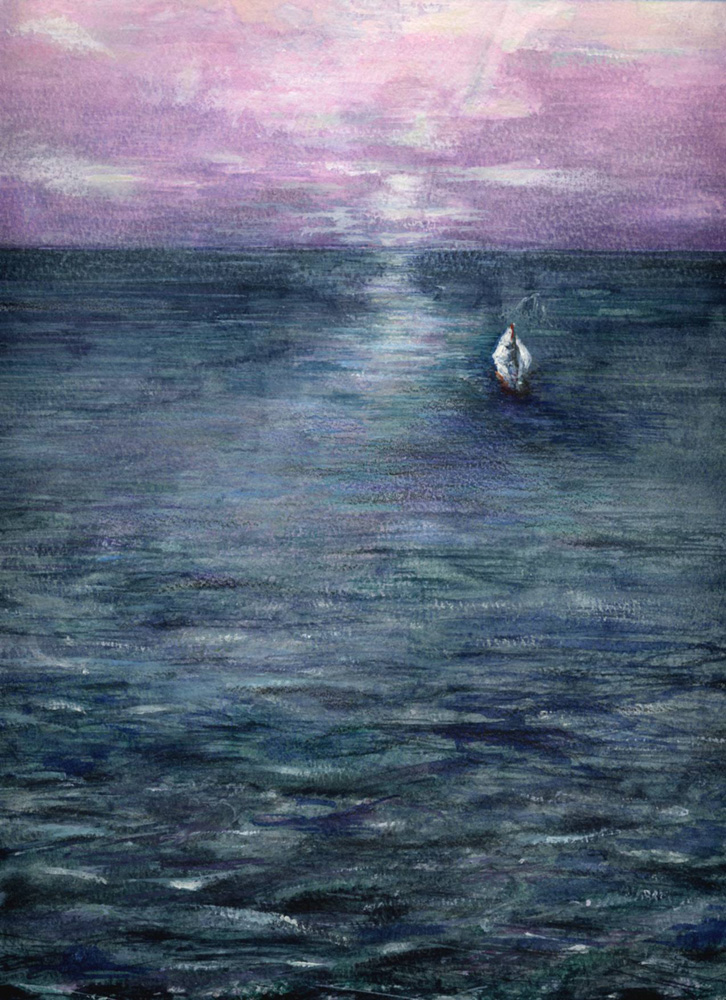
| …warm, effective and entertaining and most appealing to the listener | ||
| —Yehudi Menuhin |
Click the quotation text to discover what it refers to!
| …warm, effective and entertaining and most appealing to the listener | ||
| —Yehudi Menuhin |
Click the quotation text to discover what it refers to!


Fand IncWessex Press is a publisher of high quality sheet music, CDs and books, all focussing on accessible 20th Century and contemporary composers and concentrating mainly on first editions. Please use the tabs at the top of the page to explore the catalogue. Further details, such as information about ordering, can be found on the Contact/Info page.
This work was completed in July 1912 but remained unplayed until 17th September 1986, when Martin Roscoe recorded it in Manchester for a Radio 3 broadcast on 14th February 1987. In February 1915 Bax finished making an orchestral version, which also remained unperformed during his lifetime and was given its première by the Strolling Players Orchestra conducted by Terence Lovett at the Royal Academy of Music on 31st May 1961.
The title derives from Greek νυμφόληπτος (numpholēptos), one who suffers from nympholepsy, a state of rapture inspired by nymphs, and on the manuscript Bax has written:
sic
The manuscript of the orchestral version (owned by Warner Chappell Music Ltd but unpublished) has an additional programme note:
A Nympholept
The Woods of Westermain
The Meredith quotation appears on the next page:
Robert Browning also wrote a poem entitled Numpholeptos, and Bax himself had written one called Nympholept, which is dated 26th February 1912, five months before the piano score was completed; it was published anonymously in Love Poems of a Musician (London, 1923), pp. 12–13.
In 1951, Christopher Whelen sent Bax a questionnaire about his music. In reply to the query “Nympholept? Meaning of this word,” he replied: “This is based upon a poem of the same name by Swinburne about panic induced by noonday silence in the woods.”
—Graham Parlett
The Fand edition of Nympholept has been recorded by pianist Natalia Williams-Wandoch on the CD Piano Music by Arnold Bax (USK 1236CD) from Usk Recordings.
This is the first of two similar concerts. The second performance is in Birmingham on 17th June.
A programme of British cello music celebrating the 90th Anniversary of John Barton Armstrong’s birth, with:
View venue and South Ealing station in a larger map
The featured work at this event is John Barton Armstrong’s Cello Sonata, a very substantial single-movement piece of nearly half an hour’s duration that ranks as one of his most important compositions after his symphonies and opera. Also featured is Peter Thompson’s The Renaissance Spirit, a solo piano work written in memory of John Barton Armstrong. Both The Renaissance Spirit and Martin Glover’s Interstate are receiving their first performances at these concerts.
| Date: | Thursday, 28th March 2013 at 7:30 pm |
|---|---|
| Venue: | Vestry Hall |
| University of West London | |
| Ranelagh Road | |
| London W5 5RJ | |
| (near South Ealing tube station; see map to the right) |
Entry to this event is now FREE! (This is contrary to initial advertising.)
Note that this concert will be repeated in Birmingham on 17th June.

Concessions: £5 • Tickets are not being issued in advance; payment will be at the door.
This is the second of two similar concerts. The first performance is in London on 28th March.
A programme of British cello music celebrating the 90th Anniversary of John Barton Armstrong’s birth, with:
View venue and New Street station in a larger map
The featured work at this event is John Barton Armstrong’s Cello Sonata, a very substantial single-movement piece of nearly half an hour’s duration that ranks as one of his most important compositions after his symphonies and opera. Also featured is Peter Thompson’s The Renaissance Spirit, a solo piano work written in memory of John Barton Armstrong. Both The Renaissance Spirit and Martin Glover’s Interstate are receiving their first performances at these concerts.
| Date: | Thursday, 17th June 2013 at 7:30 pm |
|---|---|
| Venue: | Recital Hall |
| Birmingham City University | |
| Paradise Place | |
| Fletchers Walk | |
| Birmingham B3 3HG | |
| (near New Street station; see map to the right) |
Entry costs £7 (concessions £5); please pay at the door.
Note that this concert is a repeat of the one in London on 28th March.
The score of Pinecroft Suite was found amongst John Barton Armstrong’s papers after his death in 2010. It is an affectionate tribute to a family he used to visit regularly at a house called Pinecroft in East Horsley, and, as the youngest member, Hugh, was just a baby at the time (see Hugh’s Twinkle), the score can be dated at around 1964. Each piece is a miniature musical sketch: one for each family member.
The six pieces vary in difficulty (number 4, Barnes’ Invention, being significantly more difficult than the others), but overall should suit a pianist of around Grade 6 standard.
This collection presents three songs on similar themes of nature and the countryside, all of which may be performed by a medium voice and accompanied by piano or harp. Note that the first song may also be accompanied by guitar.
A CD of Gary Higginson’s music, entitled Songs of Innocence and of Experience [REGCD381], has been released on the Regent label. These songs are performed on that disc, and the samples provided here are taken from this recording by courtesy of Regent Records and the composer.
Performance note: although the repeat indicated in the score of Mirie It Is is not observed in the recording presented here, under normal circumstances it should be performed.
Bax’s Legend-Sonata, the major work featured on this disc, was written for Florence Hooton and was first performed by her in 1943. This CD was released to mark Florence Hooton’s centenary in 2012 and features her pupil, the acclaimed cellist Lionel Handy, accompanied by Nigel Clayton in a highly authoritative set of performances. Lionel is a long-serving professor at the Royal Academy of Music, teaches at the Birmingham Conservatoire and in summer schools throughout Europe, and has been guest principal with most leading UK orchestras. He writes:
The inspiration for this recording was the centenary of Florence Hooton in 2012. While studying at the Royal Academy of Music I was greatly encouraged by her dynamic teaching. Florence herself worked closely with many composers, and her rapport with Bax enabled her to pass on invaluable insights into interpreting his works.
—Lionel Handy
The CD is a particularly high-quality production: aside from its authoritative and well-recorded performances, no expense has been spared in its manufacture. It features a lavish 12-page booklet containing an essay by Lewis Foreman and a picture-disc, with full-colour printing throughout (see sample images and track samples below). A must for all Bax fans!
This work is based on a fragment of song still frequently to be heard on Saturday nights at certain inns in the Broads district of East Norfolk. Whenever possible, it is preferable to perform the piece in the version with a voice part; but it should be understood that the singer need not be a professional one, in fact anybody with a clear and natural manner of singing may sing the verse. And in any case, the singer must be in an unobtrusive position, sitting at the back of the orchestra or out of sight altogether.
—E. J. Moeran
Having loved and admired this work of ‘Jack’ Moeran for about forty years, it was a real pleasure to arrange it for piano solo, and I am grateful here to Peter Thompson for his encouragement in this connection.
In line with Moeran’s wishes, there is an alternative vocal ending provided. Pianists performing the arrangement as a solo should simply play pages 1 to 7 inclusive. If the version with voice is being performed, at the end of bar 106 on page 7 there is a cut to the top of page 8 (bar 131) [see sample pages below].
The first performance of this arrangement was given by the arranger (piano), with Jennifer Bastable (voice) at the Annual General Meeting of the Peter Warlock Society at Brompton Oratory Lodge, London, on 12th May 2012.
—John Mitchell
Lonely Waters is one of a pair of short orchestral pieces (the other being Whythorne’s Shadow) that Moeran wrote in 1931 as Two Pieces for Small Orchestra. Both pieces are based on existing melodies: Lonely Waters on a folksong and Whythorne’s Shadow on an Elizabethan tune. Both have been arranged for piano solo by John Mitchell and are available from Fand.
 Previous announcements may be found in the Fand News Archive.